A gentle guide to breathing new life into yesterday’s meals, saving time and easing kitchen flow. Discover simple ways to transform what’s waiting in your fridge into fresh, inviting dishes. These steps settle into your routine softly, one breath at a time.
Start with a Quiet Assessment
Open the fridge door in soft light. Let your eyes rest on each container, noting colors that still hold vibrancy and textures that invite touch.
Smell gently—fresh earthiness or a hint of fade tells the story. This quiet check supports decisions without rush, easing what stays or goes.
If you’re new to this flow, a beginner’s guide to simple meal prepping can help portion things mindfully from the start, carrying over to these refresh moments.
Ease Storage into Freshness
Move leftovers to clear glass jars that seal tight. Airtight homes keep moisture close, softening the dry edges that time brings.
For crisp greens or bread, mist lightly with water and wrap in a clean cloth. Let it rest overnight in the fridge’s calm chill.
This small shift revives without effort, settling flavors back into place. It supports the next steps, like reheating, with gentle readiness.
Soften Reheating with Steam
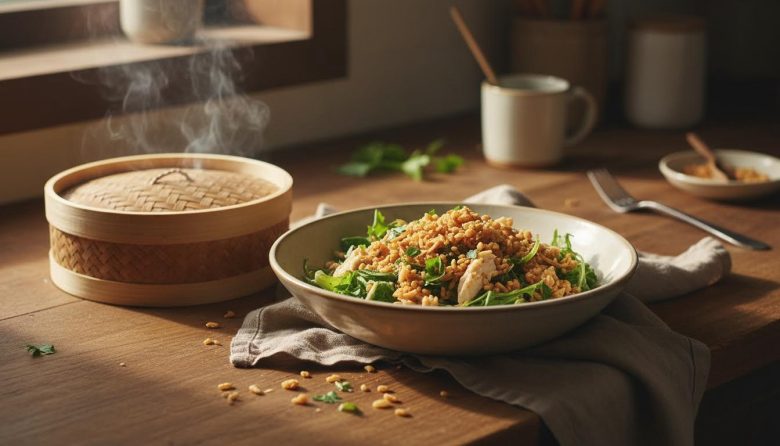
Fill a pot with a shallow layer of water and bring to a soft simmer. Place a steamer basket above, adding your portion without crowding.
Cover and let steam rise for two to four minutes, depending on thickness. The warm mist clings, keeping tenderness alive.
Unlike quick microwave bursts, this method holds the original softness. Taste as it settles—add a pinch of salt if it calls for it.
Steam works wonders for grains or vegetables, easing them back to life. It pairs well with the storage tips above, building a smooth rhythm.
Transform Common Leftovers
Here, simple pairings turn everyday remains into something new. The table below offers quiet ideas, each taking moments to unfold.
Draw from these to suit your fridge’s quiet contents. They support creativity without pressure.
| Original Leftover | Quick Refresh Idea | Time | Added Ease |
|---|---|---|---|
| Cooked rice | Stir-fry with a beaten egg, green onions, and a dash of soy. Heat oil gently, fold in rice until warm and coated. | 5 minutes | One-pan ease; uses bits from your fridge door. |
| Steamed veggies | Mix into a soft frittata with eggs and cheese. Bake at 350°F until set, or scramble in a pan. | 10 minutes | Layered warmth; hides any softness perfectly. |
| Day-old bread | Tear into chunks, toast with olive oil and garlic. Blend into panzanella with tomatoes and basil. | 7 minutes | Crisp revival; no waste, just fresh salad base. |
| Pasta | Toss with pesto or yogurt, cherry tomatoes, and feta. Warm lightly or serve chilled as a side. | 4 minutes | Cold or warm option; flavors bloom anew. |
| Grilled chicken or tofu | Shred and wrap in tortillas with avocado and lime. Or chop into a grain salad with herbs. | 6 minutes | Handheld simplicity; travels well for lunch. |
| Roast potatoes | Mash with butter and milk, form into cakes, pan-fry golden. Top with a fried egg. | 8 minutes | Comfort reshape; breakfast or side in one go. |
| Soup or stew | Blend smooth, thin with broth, simmer with spinach. Serve with a swirl of cream. | 5 minutes | Velvety change; stretches one bowl to two. |
These swaps fit most evenings, drawing from what you have. For veggies that need extra love, consider how to grill veggies perfectly at home next time, so leftovers start stronger.
Each row builds confidence, one try at a time. Notice how the added ease keeps things light.
Layer in Gentle Flavors
Reach for olive oil first—a slow drizzle wakes sleeping notes. It softens and supports without shouting.
Sprinkle fresh herbs like parsley or dill, chopped fine. Or stir in plain yogurt for creaminess that settles spices.
A squeeze of lemon brightens edges, easing staleness away. These touches take seconds, yet invite the dish back to the table.
If flavors feel flat, a how to swap unhealthy ingredients easily approach works here too—trade salt for herbs, sugar for citrus.
Layer one or two, taste, and pause. This rhythm honors the original meal’s quiet story.
Blend into New Shapes
Mash tired veggies with a fork, mix in an egg and breadcrumbs. Shape into small patties and pan-fry till golden.
Toss grains with fresh greens and nuts for a salad bowl. The new form surprises gently, refreshing the palate.
Chop proteins small, fold into omelets or quesadillas. Heat wraps slowly so cheese melts soft.
These reshapes turn one meal into another, easing repetition. Let creativity settle as you go—no perfect shapes needed.
From flat rice to fried delight, or pasta to cold noodle bowls, the change feels natural. It connects yesterday to today smoothly.
Plan for Tomorrow’s Ease
As you refresh, think ahead—portion into single servings. Label with contents and date in soft script.
Stack neatly in the fridge’s front row, easy to spot. This habit eases the next day’s pull from the stove.
Cool everything quickly after use, lid loose at first. It supports safety and that fresh feel.
Try one tip tomorrow, perhaps the steam method. Be kind to yourself if the kitchen unfolds slowly—small steps build the flow.
Over time, this cycle softens waste and haste. Your meals gain a gentle rhythm, day by day.
FAQ
Is it safe to refresh leftovers more than once?
Keep it to within two days of the original cooking, and reheat just once after refreshing. Trust your senses—clear scents and firm textures guide you best. When in doubt, release with kindness to stay grounded.
How long do refreshed leftovers last?
Plan to enjoy them within one to two days in the fridge. Cool them quickly after any refresh to hold quality. This keeps things simple and supportive.
Can I freeze refreshed dishes?
Yes, portion into bags or containers, squeezing out air. Thaw slowly in the fridge overnight for the best texture. Avoid refreezing after thawing to ease things safely.
What if my leftovers smell off?
Let them go without second thought—your nose knows freshness. It’s kinder to start anew than to push. Compost or share if possible, settling the space for tomorrow.
Do I need special tools?
No, a basic pan, steamer basket, or even a colander over a pot works fine. Keep to what you have for that home ease. Simplicity supports the calm flow every time.
Can I refresh soups or sauces?
Absolutely—simmer gently with a splash of broth or milk to loosen. Stir in fresh greens at the end for life. It transforms a bowl into something inviting again.
What about refreshing for kids or picky eaters?
Reshape into fun forms like patties or wraps, hiding veggies in cheese melts. Keep flavors mild and familiar. Their smiles ease the effort naturally.