Picture a quiet Sunday afternoon, sunlight filtering through the kitchen window as you move slowly from counter to stove. The week ahead feels less rushed when a few simple preps are in place—nourishing meals that support steady energy without the scramble. I remember my own reset a few months back: after a hectic stretch of late nights, I spent an hour chopping veggies and simmering grains, then savored the calm of grabbing a ready bowl each morning. It wasn’t about perfection, just easing into habits that settle the body and mind.
Those small shifts invite balance, like pairing roasted sweet potatoes with chickpeas for a gentle protein boost. No need for elaborate plans; start with what feels right in your space. This routine builds on basics, helping weekdays flow with less decision fatigue around eating.
Gathering Ingredients with Sunday Calm
Begin with a short list of whole foods that mix easily: oats or quinoa for grains, leafy greens and colorful veggies like carrots and broccoli, eggs or tofu for protein, a few avocados or nuts for fats. Keep it to 5-7 staples to avoid overwhelm—think seasonal picks that feel fresh.
I head to the market for 20 minutes on Sunday mornings, filling a reusable bag with spinach, bell peppers, chicken breasts or lentils, and a lemon for brightness. This supports balanced plates where half is veggies, a quarter protein, and the rest grains or fats, easing digestion and steady blood sugar.
Soft tip: jot your list on a scrap of paper the night before. It turns shopping into a calm wander, not a chore. For more on foundational steps, a beginner’s guide to easy meal prepping basics can settle any first-time nerves.
Easing into Chopping and Gentle Cooking
With ingredients home, wash them under cool water and pat dry. Set up one baking tray for roasting veggies at 400°F for 25 minutes—toss broccoli and carrots in olive oil, salt, and herbs. On the stovetop, simmer quinoa in twice the water for 15 minutes, or boil eggs to peel later.
These low-key methods build nutrition without fuss: roasted veggies keep vitamins intact, proteins like chicken or beans offer sustained energy. I love one-pan wonders, like sweet potatoes with chickpeas, which fill the kitchen with a warm, grounding aroma.
Nutrition eases in naturally—aim for color on the plate to cover bases like fiber from grains and antioxidants from produce. Breathe between steps; this isn’t a race.
Building Steady Bowls and Jars
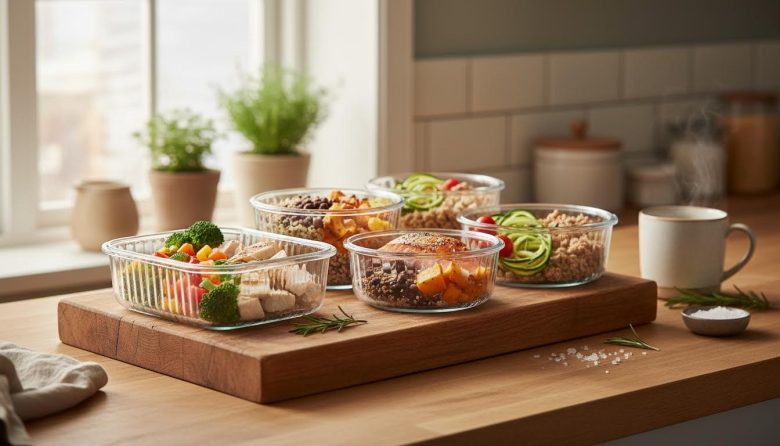
Mason jars work beautifully for layered salads: start with dressing at the bottom, then grains, proteins, veggies, and greens on top to stay crisp. Grain bowls in containers mix cooked quinoa with roasted veggies, tofu or eggs, a drizzle of tahini, and seeds for fats.
For vegetarian paths, swap chicken for lentils simmered with garlic; vegans can use tempeh or extra beans. My go-to for even energy: farro base, kale, roasted beets, walnuts, and feta or a plant-based alternative—holds me steady through afternoon slumps without heaviness.
These hold 4-5 days’ worth, adapting to your needs. Add fresh herbs right before eating for life. Pairing with simple sides, like those in 8 quick veggie sides under 150 calories each, keeps variety soft and light.
- Gather and wash. Rinse all produce and proteins under gentle flow. Lay out on a towel to air dry—this step grounds you, taking just 10 minutes.
- Cook in batches. Roast two trays of veggies while grains simmer. Use sheet pans for ease; everything cooks in under 30 minutes total, filling your kitchen with soft scents.
- Assemble and portion. Layer jars or bowls with base grains, then proteins, veggies, and toppings. Divide into daily servings—four lunches, perhaps two dinners—to match your rhythm.
- Label and store. Date containers with a marker. Slide into fridge spots for quick access, leaving room for flexibility if evenings shift.
This flow takes about 90 minutes total, leaving space for a walk or tea. It supports lasting habits through simplicity.
Simple Ways to Store for the Week
Glass or BPA-free plastic containers with lids keep things fresh—portion into single servings for grab-and-go ease. Place proteins front and center in the fridge, veggies in crisper drawers to hold moisture.
Airtight seals prevent wilting; I stack jars upright to save space. If plans change, freeze extras—no guilt, just kindness to your flow.
This setup softens weekday mornings, turning prep into quiet support.
Unpacking Your Prep Each Morning
In soft morning light, pull a jar or bowl from the fridge. Reheat grains and proteins gently in the microwave for 1-2 minutes, or enjoy cold if it suits. Add a fresh squeeze of lemon or herbs for brightness.
For work-from-home days, I settle at the table with my bowl and tea, savoring the ritual. Office folks can pack in a lunch bag with an ice pack—simple, steady fuel till evening.
This small unpack eases the day open, nourishing without rush. Details on quick lunches fit right here, as in how to prep healthy lunches in just 20 minutes.
Soft Adjustments for Your Life’s Rhythm
For busy families, scale up batches and involve kids in washing veggies—turns it communal. Solo eaters might halve portions for less waste, focusing on one bowl type.
Dietary tweaks shine: gluten-free with rice, low-carb by skipping grains for extra greens. Start with one change, like prepping proteins only, to build gently.
Your rhythm guides it—be kind if a day skips. These shifts foster calm eating over time.
Try prepping just one item this weekend. Notice how it settles your week. Small steps invite lasting ease.
A Few Gentle Answers
How much time does this routine really take?
About 90 minutes on Sunday, spread across gentle steps. It saves hours midweek, easing daily choices. Adjust to your pace—half an hour works for basics.
Can I adapt for picky eaters or allergies?
Yes, swap familiar veggies or proteins like rice over quinoa for texture preferences. For nuts or dairy, use seeds or plant options. Keep it personal and safe, consulting needs as they arise.
What if I don’t have fancy containers?
Reuse jars from store-bought goods or simple Tupperware—anything airtight does. Ziploc bags work for portions too. Focus on function over form; your kitchen has what you need.
Will prepped food stay fresh all week?
Most hold 4-5 days in the fridge if cooled quickly and stored right. Eat proteins first, freeze if longer. Trust your senses—fresh smell and look guide you.
Is this okay for weight maintenance?
It supports balance with whole foods and portions, helping steady hunger. Listen to your body, adjusting sizes as feels right. Pair with walks for gentle harmony, not restriction.