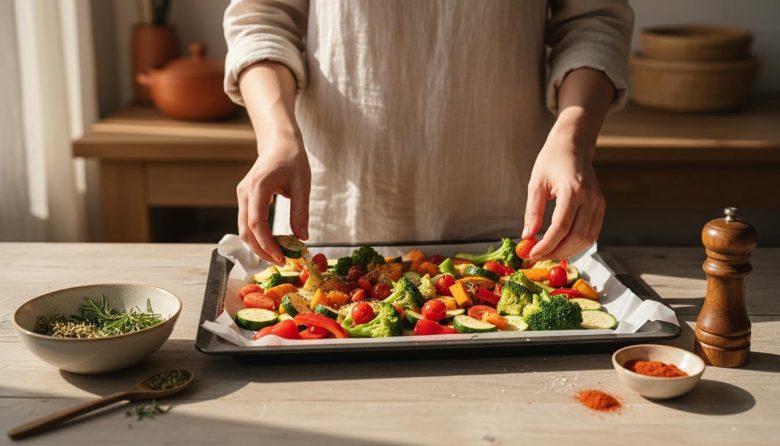
Imagine a quiet evening in your kitchen. Soft light filters through the window as you slice bell peppers and zucchini, their colors bright against the cutting board. The oven hums gently, filling the air with a warmth that feels like home.
Roasting vegetables eases out their natural sugars, turning simple roots and greens into something deeper, more inviting. It’s a way to nourish your body without much effort—one pan, a few minutes of prep, and the oven does the rest. These roasted bites support steady energy, packed with fiber and vitamins that settle into your day.
Think of last week’s Tuesday: carrots and broccoli from the fridge became a side that quieted my evening cravings. No fancy recipes, just a small shift that made dinner feel complete. Try it once this week—pick one vegetable, let the heat work its calm magic.
Root vegetables like carrots hold a gentle sweetness when roasted, coaxing out flavors that raw bites can’t match. Their natural beta-carotene supports skin and eyes, a quiet nutrition boost in everyday eating. Broccoli softens to tender florets, keeping its vitamin C while gaining crisp edges.
Sweet potatoes warm to creamy centers, rich in fiber that eases digestion over time. In season, look for dense picks like parsnips or cauliflower—they roast evenly without much watching. A simple grocery list: carrots, broccoli heads, a couple sweet potatoes, maybe Brussels sprouts if they’re calling.
Denser veggies like potatoes need a bit more time, so group similar ones together. This small adaptation keeps things simple, supporting meals that fit your week. For softer results, try eggplant or mushrooms—they release moisture kindly.
Vegetables That Warm to Sweetness in the Oven
Carrots slice into rounds that curl at the edges, their orange glow deepening. Broccoli florets cluster like little trees, turning golden with a nutty note. Sweet potatoes cube up for a velvety bite that pairs with almost anything.
Seasonal ease comes from what’s at hand—winter roots or summer squash both settle into the heat. Density matters: firmer ones like cauliflower hold shape, while softer zucchini softens just right. Start with what you have; it’s a gentle way to build the habit.
Nutrition here is straightforward: these picks offer potassium for steady blood pressure, antioxidants to support your cells. Real life: a friend swaps fries for roasted sweet potato wedges weekly—small change, lasting satisfaction. When exploring kitchen tips for faster healthy prep, roasting fits right in with minimal cleanup.
Cutting Shapes for Soft Caramel Edges
Even sizes help heat settle evenly—no rushing some bits while others wait. Aim for bite-sized pieces, about an inch across, so everything caramelizes softly. A simple knife, steady breath, and you’re set.
Carrots into half-moons, broccoli into florets with stems trimmed. Sweet potatoes peeled or not—cubes invite crisp outsides. This breathing space in prep means less fuss later.
Uneven? No worry; denser ends can trim smaller. It’s like a short walk: one step at a time builds the path. Over time, this ease turns chopping into a calming routine.
Oils and Salt to Cradle Natural Flavors
A light coat of oil supports the roast, letting veggies breathe without sogginess. Olive or avocado oil works everyday—their gentle fats carry flavors. Just a tablespoon or two per pan does it.
Sprinkle sea salt to draw out moisture, enhancing that natural taste. No need for heavy hands; a pinch settles everything. Fresh ground pepper adds a soft warmth if you like.
For adaptations, coconut oil brings a subtle tropical note to roots. Nutrition basics: healthy fats help absorb vitamins like A and E from the veggies. Keep it simple—one oil, one salt, repeated habits.
Easing Into Your Roast
- Preheat your oven to 425°F—this steady heat supports crisp edges without hurry. Line a sheet pan with parchment for easy release. Give it 10 minutes to warm fully.
- Toss the cut veggies lightly with oil, using clean hands or a bowl. Coat evenly so flavors cradle each piece. A tip: start low to avoid excess.
- Spread them out on the pan—space lets air flow, softening into gold. Crowding steams instead of roasts, so use two pans if needed. Breathe here; it’s the gentle key.
- Slide into the oven, turning midway with a spatula for even color. Times vary: 20-30 minutes for broccoli, 35-45 for roots. Listen for that caramel scent.
- Rest them briefly on the pan—flavors settle as they cool. Taste one; adjust salt if your heart calls. This pause makes all the difference.
Seasonings That Deepen Without Overpowering
Fresh herbs like rosemary or thyme ease in at the end, their aromas blooming. Garlic cloves roast whole, turning soft and sweet—no bite, just comfort. A sprinkle of smoked paprika adds depth quietly.
Start small: one herb, one spice per pan. For vegan ease, nutritional yeast dusts a cheesy note without dairy. Grocery staple: dried oregano for busy nights.
Real example: Tuesday’s carrots with cumin—a warm spice that supports digestion gently. These touches build layers, encouraging that next small change. Adapt for low-sodium by leaning on herbs alone.
Finding the Golden Resting Point
Watch for fork-tender centers with crisp, caramelized edges—that’s the sweet spot. No rigid timer; ovens vary, so peek after 20 minutes. Pull them early if edges brown fast.
Colors deepen: orange to amber, green to charred flecks. A gentle nudge with tongs tells you they’re ready. Resting lets juices redistribute softly.
Simple Ways to Settle Roasted Veggies Into Meals
Spoon them into grain bowls with quinoa and a soft egg—balance settles hunger. As sides, they cradle grilled chicken or tofu simply. Leftovers warm gently for lunch the next day.
Adapt for gluten-free: pair with rice. Vegan? Tahini drizzle adds creaminess. Nutrition shines: fiber slows sugar release, supporting even energy.
Weeknight real life: roasted broccoli with lemon atop salmon—five minutes to plate. For snacks, cool and store; they hold well. When thinking about 7 light lunch ideas for workdays, add these as a base. Or prep energizing snacks in advance by roasting ahead. Pick one way tomorrow; be kind if it shifts.
A Few Gentle Answers
What’s a good oven temperature to start with?
Around 425°F offers steady heat for crisp edges and soft centers, without any rush. If you prefer gentler results, ease down to 400°F for denser roots like sweet potatoes. It’s forgiving—your oven’s nature guides the best fit.
Can I use olive oil, or is something else better?
Olive oil shines with its soft, fruity flavor that cradles veggies beautifully—extra-virgin adds everyday richness. Avocado oil handles higher heat if needed, staying neutral. Choose what settles in your pantry; both support nutrient absorption kindly.
How do I avoid soggy veggies?
Give them space on the pan—airflow turns steam into crispness naturally. Pat dry before oiling if they’re wet from washing. Two pans beat crowding every time; it’s a simple shift for better results.
What if my veggies are different sizes?
Trim denser pieces smaller so they catch up in the roast—carrots thin, broccoli uniform. They’ll settle together without stress. Uneven batches still nourish; embrace the gentle imperfection.
Are roasted veggies still good for you?
Absolutely—they hold onto vitamins like C and K, while heat eases antioxidants for better use. Fiber stays intact to support gut health softly. A nourishing choice that tastes like care.