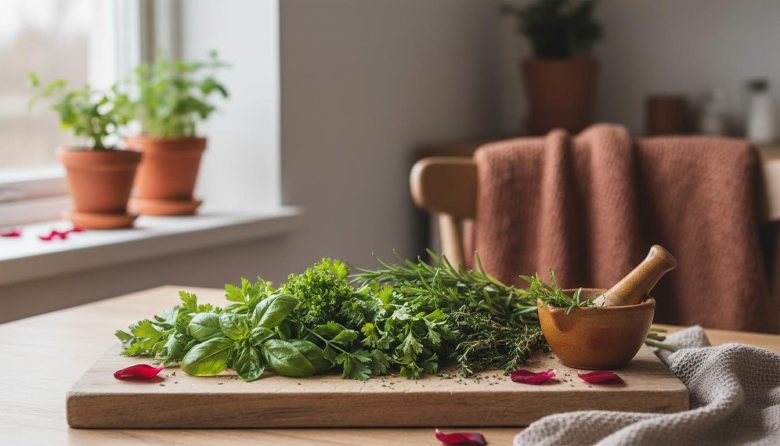
In the quiet of my kitchen one morning, I reached for a bunch of fresh basil instead of reaching for salt or butter. The leaves released a sweet, peppery aroma that filled the air softly, turning simple tomatoes into something alive with flavor. No extra calories, just pure taste from the earth.
Herbs like these settle into meals without effort, lifting everyday dishes gently. They bring color, scent, and a subtle brightness that feels nourishing. Ahead, you’ll find 12 herbs that do just that, along with easy swaps to try.
Imagine your plate coming alive with these gentle additions. They support what you already enjoy, without weighing things down.
Herbs as a Soft Way to Lift Your Meals
Herbs carry almost no calories, yet they awaken your senses with real flavor. A sprinkle of parsley or a whisper of thyme can make vegetables sing without any added weight.
They ease digestion softly, as their natural oils settle the stomach. Colors from green cilantro to deep rosemary leaves add a calm beauty to your plate.
Aromas rise gently as you cook, inviting you to savor each bite. This simple shift feels supportive, like a quiet friend in the kitchen.
When you build balanced plates every meal, herbs help everything come together naturally. They pair well with roasted veggies or fresh starts to the day.
Finding Fresh Herbs Close to Home
Look for herbs at your local market or grocery, where bundles sit in soft light. Feel for vibrant leaves that spring back when touched, and give them a gentle sniff for lively scent.
Start a small pot on your windowsill if space allows—basil or mint grow with little care. Beginners, choose one or two at first; kindness to yourself matters here.
These spots keep costs low and quality close. Your hands will learn what fresh feels like over time.
Easy Herb Swaps for Bright Flavor
These swaps let flavor bloom without extra calories. They replace richer options seamlessly, bringing lightness to familiar foods.
| Herb | Flavor Notes | Often Replaces | Simple Pairing Idea |
|---|---|---|---|
| Basil | Sweet, peppery lift | Butter in pasta | Tomato salad |
| Parsley | Fresh, green bite | Creamy sauces | Steamed potatoes |
| Cilantro | Citrusy, earthy tang | Sour cream dips | Black beans |
| Mint | Cool, refreshing spark | Sugar in drinks | Yogurt with cucumber |
| Dill | Light, tangy grassiness | Mayo in salads | Poached fish |
| Chives | Mild onion whisper | Cheese toppings | Baked eggs |
| Oregano | Warm, slightly bitter earth | Oil-heavy dressings | Grilled zucchini |
| Thyme | Woodsy, lemon hint | Heavy stocks | Roasted carrots |
| Rosemary | Piney, resin depth | Bacon fats | Chicken potatoes |
| Sage | Velvety, savory warmth | Rich gravies | Butternut squash |
| Tarragon | Anise-like sweetness | Cream in eggs | Green beans |
| Bay Leaf | Subtle, clove nuance | Salt-heavy broths | Slow lentils |
Pick one to try soon. Let it settle into your next meal with ease.
Handling Herbs with a Light Touch
Prep herbs simply to keep their essence alive. Start by rinsing under cool water.
- Fill a bowl with cool water and swish leaves gently for a minute.
- Pat dry with a soft cloth or spinner—moisture softens flavor if left.
- Chop or tear just before using; stems hold less punch.
- For mincing, gather in a pile and rock the knife steadily.
This takes moments but supports brighter taste. Your knife hand learns the rhythm quickly.
Folding Herbs into Familiar Foods
Add most herbs at the end of cooking to hold their gentle lift. Stir fresh leaves into warm soups or salads as they soften just right.
For heartier ones like rosemary, tuck in early to mellow. A 7-day plan for simple healthy breakfasts might welcome chives on eggs or mint in fruit.
Try oregano on how to roast veggies for max flavor—sprinkle after for a warm earth note. These touches ease into daily routines without fuss.
Layer lightly: basil over tomatoes, dill with fish. Taste as you go; your meals brighten naturally.
Keeping Herbs Fresh a Little Longer
Store greens upright in a jar with water, like a small bouquet in the fridge. Change water every couple days for steady life.
- Wrap heartier stems loosely in a damp towel, then bag gently.
- Freeze chopped extras in ice cube trays with a touch of water.
- Dry bundles upside down in a shady spot for weeks of use.
- Check weekly; let go of what wilts without worry.
These steps extend their quiet gift. A little care goes far.
Sometimes Asked Questions
Do these herbs add calories to dishes?
Nearly none—trace amounts at most, often under five per tablespoon fresh. They shine for pure flavor, supporting light meals effortlessly. Feel free to use generously.
How do I store fresh herbs best?
Wrap loosely in a damp paper towel and place in a breathable bag in the fridge; most stay perky 5-7 days. Heartier ones like rosemary last longer upright in water. Be kind if they soften a bit—your next bunch awaits.
Can dried herbs work the same?
Yes, use about a third as much since flavors concentrate. They settle well in soups, stews, or rubs. Rehydrate gently in warm dishes for full effect.
What if I’m new to strong flavors?
Start with small pinches; taste as you add. Your palate eases in over a few meals. Mild ones like parsley or chives welcome beginners softly.
Are there allergy notes for these herbs?
Most are gentle for everyday use; some like tarragon relate to ragweed family, so check if sensitive. Listen to your body and introduce one at a time. Fresh air grows familiarity safely.
Try one herb this week, perhaps basil on tomatoes. Be kind to yourself as flavors unfold. You’ve got this.